
What to Expect Day by Day
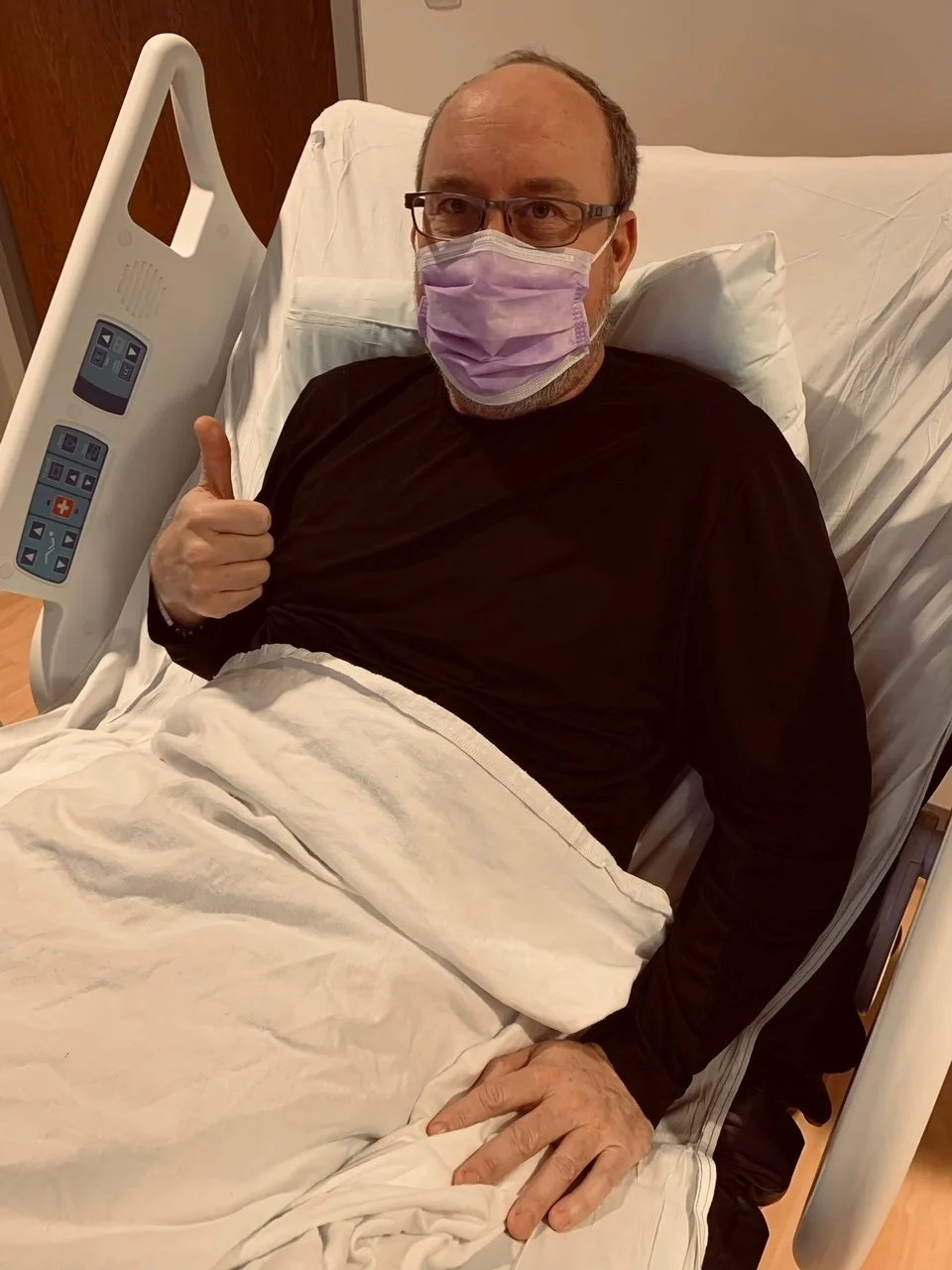
The big day I had been waiting for. I was very anxious but excited to receive my Yescarta infusion after waiting 6 weeks to get to this point. Prior to arriving at the infusion center, I took several medications (antiviral, antifungal and antibiotic) which I would continue throughout the 30-day treatment period to prevent infections.
Once the CAR-T doctor approved the infusion, the T-cells were brought in and thawed. Once thawed, they must be infused within an hour before expiring. I was given Benadryl and Tylenol to reduce the likelihood of reaction to the CAR-T preservative. The actual infusion was uneventful and only took about 15 minutes. There is a distinct smell of creamed corn during the infusion, which is from the preservative — this smell continues for a day or two.
After the infusion, the nurse checked my vitals every 15 minutes for the first hour, then every 30 minutes, then hourly until 4 hours elapsed. I had no observed side effects and was discharged. The entire process took about 8 hours. Once home, I ate a normal dinner and felt fine. Before sleep I had a slight headache but slept OK.
Morning vitals were stable. Proceeded to the infusion center for my daily appointment. I experienced mild nausea and took Compazine. Blood tests showed CRP (Inflammation marker) had significantly increased from a baseline of 5.0 mg/L to 32 mg/L.
I was very exhausted for the rest of the day with no appetite. Nighttime vitals indicated a fever of 101.0°F — we called the 24-hour CAR-T support line and were advised to come to the hospital. Blood cultures were performed to rule out infection. I was given Tylenol for my headache and began to feel better. No fever overnight.
Morning CRP had increased to 96 mg/L. Blood cultures came back negative for any infection — a clear sign I was battling Cytokine Release Syndrome (CRS). I had a slight headache that was manageable with a cold compress in the morning but got worse through the day. Fever returned overnight and I was given Tylenol. My pain/discomfort was a 7 out of 10. Difficult time sleeping.
Fever and headache continued. CRP increased to 100 mg/L. Liver enzymes (Bilirubin) had increased from a baseline of 0.4 mg/dl to 2.5 mg/dl — considered Stage 2 organ involvement. The team administered TOCI (Tocilizumab) and DEX (Dexamethasone) back-to-back via IV over about 2 hours.
Within an hour, I felt like an entirely new person. My headache and fever subsided, my appetite returned and I was drinking fluids again. I felt like I could go home but they wanted to keep me another night for observation. A second round of TOCI/DEX was ordered that evening as Bilirubin continued to rise to 2.9 mg/dl.
Remained fever-free overnight. CRP decreased slightly to 96 mg/L. Based on symptom reduction and improving labs, I was released around 2pm. Vitals were stable for the rest of the day. Around 9pm I experienced severe lower back pain while sleeping. The CAR-T support team recommended a pain reliever but didn’t feel admission was necessary since I had no fever. Pain reliever helped but I couldn’t sleep. My Mother-in-Law arrived — a big help to my wife with caregiving.
Early morning the pain relief wore off and fever had returned. I was re-admitted to the hospital. Blood cultures were repeated to rule out infection. I was given Oxycodone for the pain which didn’t really help. My pain level was an 8 out of 10. Cold ice compresses and a heating pad helped most. TOCI/DEX was repeated and resolved the fever but did not impact the lower back pain. An x-ray and ultrasound both came back negative. A Lidocaine patch helped somewhat. My lack of sleep was beginning to affect my sanity — I hadn’t slept well in 3-4 days. Flexeril (muscle relaxer) helped with both the back pain and sleep. This was my most challenging day of the entire CAR-T therapy.
The back pain subsided by morning. CRP decreased to 77 mg/L and Bilirubin decreased to 1.9 mg/dl. Blood cultures came back positive for common skin-related bacteria in my Central Line but negative from my blood — indicating a probable infection contained within the external lumen. I was finding it more difficult to write my daily neurological test, partly from weakness. Not having eaten in two days and the lack of sleep was impacting my ability to walk short distances and concentrate. My wife was good at making me walk around the hospital floor, but I couldn’t walk more than a few minutes at a time.
Labs continued to improve — CRP decreased to 12 mg/L, Bilirubin down to 0.6 mg/dl. I was discharged in the early afternoon. I walked from the hospital to the parking garage — feeling like I was in slow motion and very tired. I got home and slept most of the day. A second blood culture confirmed the bacterial infection in my Central Line. A Vancomycin (Vanco) lock was ordered for my next outpatient visit.
Still very fatigued but appetite was slowly returning. Returned to outpatient visits. They installed the Vancomycin lock on one of my Central Line lumens — a non-invasive antibiotic placed within the external lumen to inhibit the spread of infection. Rested for the remainder of the day.
Had a better night’s sleep and was generally feeling better. Regained some strength and found it easier to walk to the outpatient appointment. Blood tests and vitals within limits.
Fatigue persisted but consistently improving. Blood cultures now positive for bacterial infection in both external Central Line lumens. The Infectious Disease department recommended continuing Vanco locks as risk was low for bacterial progression to the blood.
Fatigue improving. Daily visit for blood draw and Vanco lock replacement. This was my first day without a nap since infusion day.
Vanco locks replaced. Blood tests reduced to every other day since results had been stable for about a week. I began doing some light exercises at home and taking on small tasks around the house.
Labs drawn and Vanco locks replaced. My chemo power port was accessed and exercised. My parents and dog arrived for a visit — a big boost to my morale.
Vanco locks replaced. Feeling about 75% back to normal. My daily neurological written sentence exercise is getting noticeably easier.
Vanco locks replaced and Central Line dressing replaced. Feeling better and better each day.
Replaced Vanco locks and had blood draw. The infusion provider spoke to us about getting my Central Line removed to eliminate the risk of bacterial infection spreading to the blood. We agreed and the provider scheduled the procedure in 3 days.
Another short visit to replace Vanco locks. I find that I’m able to walk longer and longer distances each day without getting tired.
Replaced Vanco locks. Feeling stronger each day.
Blood draw followed by the Central Line removal procedure — performed in a pre-procedure room (not a surgery room). They numbed the area with Lidocaine. I felt some pressure as they removed the catheter but no pain. The whole procedure took about 15 minutes. It was sore for a couple days, but it was a relief to have it removed.
Since there was no need for Vanco locks anymore, I had 4 days off until my next visit. I had been at the hospital every single day for almost a month. The 4 days off felt like a 3-week vacation.
Each successive day I felt stronger and stronger. I took laps around our rented house at least once per day and took careful trips to the grocery store, wearing a mask and avoiding contact with others.
Blood tests conducted at the infusion center — results were good. Neurological exam passed. This was my last visit to the infusion center. It was bittersweet because I had gotten to know all the nurses and providers so well over the past month.
Blood tests and PET scan for my 30-day follow-up. My PET scan indicated that my liver and pelvic tumors were no longer detectable and my abdomen mass had decreased by over 90%, though still visible. My CAR-T physician was cautiously optimistic that treatment would continue to target the cancer and wanted to see me in 30 days for another scan and bloodwork.
Returned to Mayo for continued follow-up. My bloodwork and PET scan indicated continued progress. The scan revealed I was in remission once again. One of the best days of my life.